Expanding before testing
A large layout hides the broken join. Test each new section while the route is still short.
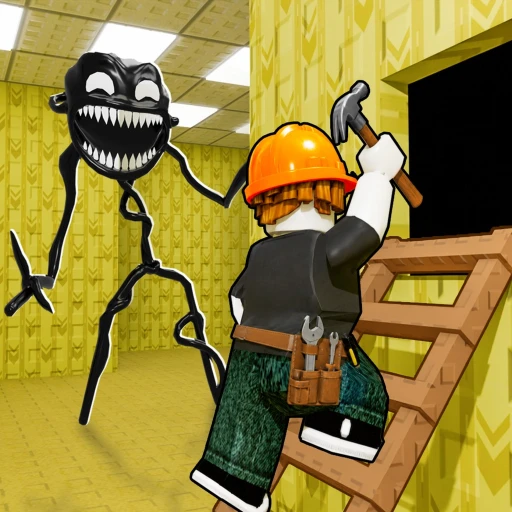 Build Your Backrooms
Beginner guide
Start small enough to see where people walk, where a monster catches them, and what changed your cash before the maze gets complicated.
Game facts checked August 4, 2026
Quick answer
First session
Connect the first sections so a visitor has a clear direction. If you cannot explain the route in one sentence, stop adding pieces.
Place one monster beside a part of the route you can observe. You are testing whether visitors reach it, not trying to fill every corner.
Watch someone enter, move through the maze, and reach or miss the monster zone. Check cash only after the route has played out.
Diagnose the run
| What you see | Likely problem | Useful next move |
|---|---|---|
| Visitor turns around or stalls | A connection or passage may not read clearly | Inspect the last joined sections and test that join before buying more |
| Visitor misses the monster | The route and monster zone do not overlap | Move the monster or reshape that one approach |
| Cash changes but you do not know why | Too many things changed at once | Return to one monster and one recent building change |
| The small loop works repeatedly | You have a stable baseline | Add one branch, corner, or extra monster zone and compare again |
Avoid the rebuild
A large layout hides the broken join. Test each new section while the route is still short.
The official page does not publish stats. Add monsters one at a time so your own run shows what changed.
This is a builder game, not a survival-lore checklist. Do not plan around systems copied from other experiences unless this game actually shows them.
Official images show the intended activity and visual roster. They do not prove costs, catch rates, or unlock order.
Ready to grow
What the game shows
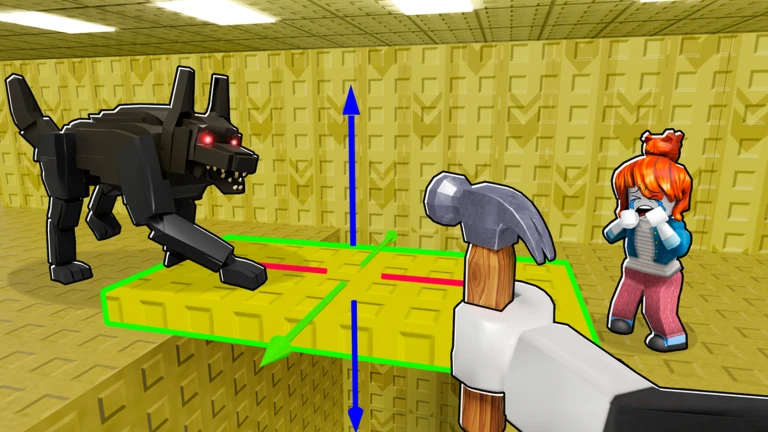
One official thumbnail shows a floor section selected with three-axis transform handles. That supports modular placement, but it does not establish a universal keyboard binding. Read the control labels in your current client before moving a live build.
Quick answers
Build one connected route that you can watch from entrance to monster zone. A small readable route teaches you more than several untested rooms.
Add one after the current visitor route is understandable and you know what the new monster is meant to test.
Watch a visitor complete or fail the route, note where that happened, and confirm that one change produces a different result.
Next chapter